French rap charted from the 93, not Paris
The dominant sound on the French chart is rap, and its postal codes are the banlieue ring, the port and Brussels — not the Rive Gauche. Here is why the map looks the way it does.

The wrong centre
Paris is the administrative fact of French music. SACEM, the authors' rights society, is headquartered there. The Centre national de la musique, the public body that funds and regulates the sector, is there. Universal Music France, Because Music, Wagram — the labels with the biggest rosters — all keep their offices inside the périphérique, the ring road that marks the city's edge. L'Olympia, La Cigale, Le Trianon: the rooms where a career gets confirmed are all within a few arrondissements of each other. The industry's address is Paris, and it has been since chanson — the tradition of the lyric-led French song — consolidated around the Left Bank after the war.
But the chart is not made in the offices. It is made where the artists are formed, and that geography has shifted decisively. Look at who has held the top of the French singles chart for the past decade: Ninho, from Essonne; Jul, from the northern districts of Marseille; SCH, also Marseille; Damso, originally from the Democratic Republic of Congo but rooted in Brussels before Paris; Stromae, Brussels; Aya Nakamura, who grew up in Aulnay-sous-Bois before the music took her to Paris. The addresses cluster outside the city that claims to run everything, and the clustering is not accidental.
Why the banlieue and not the city
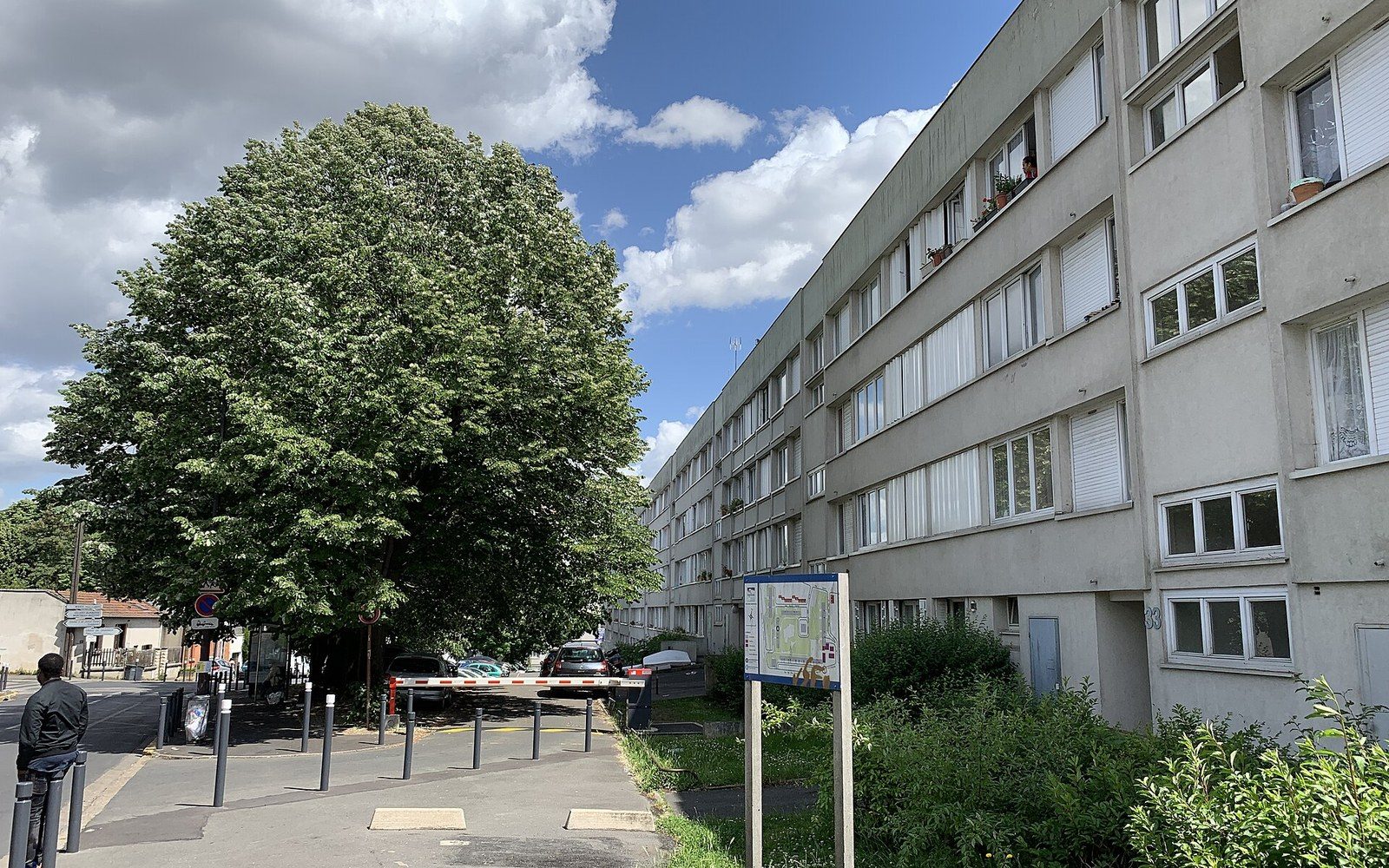
Seine-Saint-Denis — known colloquially as the 93, from its department number — is the most direct answer to the question of where French rap comes from. It is not a suburb in any comfortable sense: it is a dense, post-industrial ring of communes north and east of Paris, built around housing estates that absorbed successive waves of immigration from the 1960s onward. Aulnay-sous-Bois sits in its northern section. The department registers among the lowest median incomes of any in metropolitan France while sharing a border with the capital. That proximity without access — close enough to see the city, distant enough to be structurally excluded from most of it — is the biographical fact underneath a great deal of French rap.
The reason studios and scenes consolidated there rather than inside Paris is partly economic and partly social. Rents within the périphérique made permanent studio space inaccessible for independent operators in the 1990s and 2000s. Informal home studios, rehearsal rooms and community spaces in the 93 filled the gap. What looks, in retrospect, like a scene was, in real time, a series of practical workarounds. Labels followed the talent rather than the other way around, and by the time the streaming era repriced everything, the geography of production was already established.
Marseille's separate logic
Marseille is not a suburb of anything. It is France's second-largest city and its principal Mediterranean port, and it has always maintained a cultural self-sufficiency that the French music industry took a long time to absorb. The city's rap scene preceded any major-label interest by years, developing its own argot, its own rhythmic cadences and its own distribution networks before Paris recognised it as commercially significant. Jul, who emerged in the mid-2010s and has accumulated among the highest streaming figures of any French rapper, operates out of Marseille almost entirely, releasing at a volume and a speed that has more to do with the city's street-level culture of mixtape circulation than with any Paris-facing industry strategy. SCH, whose work is considerably darker in register, comes from the same city and represents a different strand of the same geography: Marseille as a source rather than a destination.
The port logic matters. Marseille's demography, shaped by migration routes across the Mediterranean and from French overseas territories, means that the music absorbs Maghrebi, sub-Saharan and Antillean reference in a way that is genuinely different from what happens in the 93. The accent, as anyone who has heard a Jul track will know, stays on the record. It is not suppressed or adjusted for a Paris audience.
Toulouse and Brussels, two more addresses
Bigflo & Oli made Toulouse legible as a subject rather than a backdrop. Their work, self-consciously regional from the start, named the city, named its contradictions and used the distance from Paris as material. Toulouse is France's fourth-largest city and its aerospace capital, with a student population that has made it one of the more reliable markets for independent music. The brothers' commercial trajectory — Victoires de la Musique awards in 2018 and 2019, arenas, then a deliberate step back to smaller rooms — maps a career arc that the Paris-based industry could not have engineered, because it was built on a local audience first.
Brussels adds a complication to the geography that is worth stating plainly: two of the biggest names currently associated with French music are Belgian and have said so clearly. Stromae and Angèle both work in French, both trained in Brussels, and both have described the Belgian perspective as constitutive of what they make rather than incidental to it. Belgium has its own quota rules, its own funding structures, and SABAM rather than SACEM handling rights. The fact that Paris labels eventually signed, distributed and promoted both artists does not make them Parisian; it makes Paris a commercial relay for music made elsewhere.

The quota question and what it does to the map
The Loi Toubon — the 1994 law that requires at least forty per cent of music broadcast on French radio to be in the French language — has shaped the economics of every address on this map. Its defenders argue it sustains French-language music against the structural dominance of English; its critics point out that it has historically advantaged established chanson and pop over the rap coming out of the 93 and Marseille, because programmers found it easier to fill quota hours with known quantities. The law covers language, not genre, and not geography, but its practical effect has often been to slow the chart dominance of artists from the banlieue even after their streaming numbers made the chart indifference look absurd. The quota's implementation and ongoing debates remain a live argument between broadcasters, the Centre national de la musique, and artists' organisations.
SNEP, the national federation that certifies sales and streams, now publishes certification data in a way that makes the banlieue geography legible as numbers. Ninho holds some of the highest certification totals in French rap history — certifications that reflect streaming volumes that no radio quota could have produced on its own. The chart, read that way, is its own argument: the map the industry drew and the map the audience drew are not the same map, and the audience's version has been winning for a decade.