Stromae’s Multitude arrived as argument, not comeback
Multitude arrived after years away and treated the gap as material rather than something to apologise for.
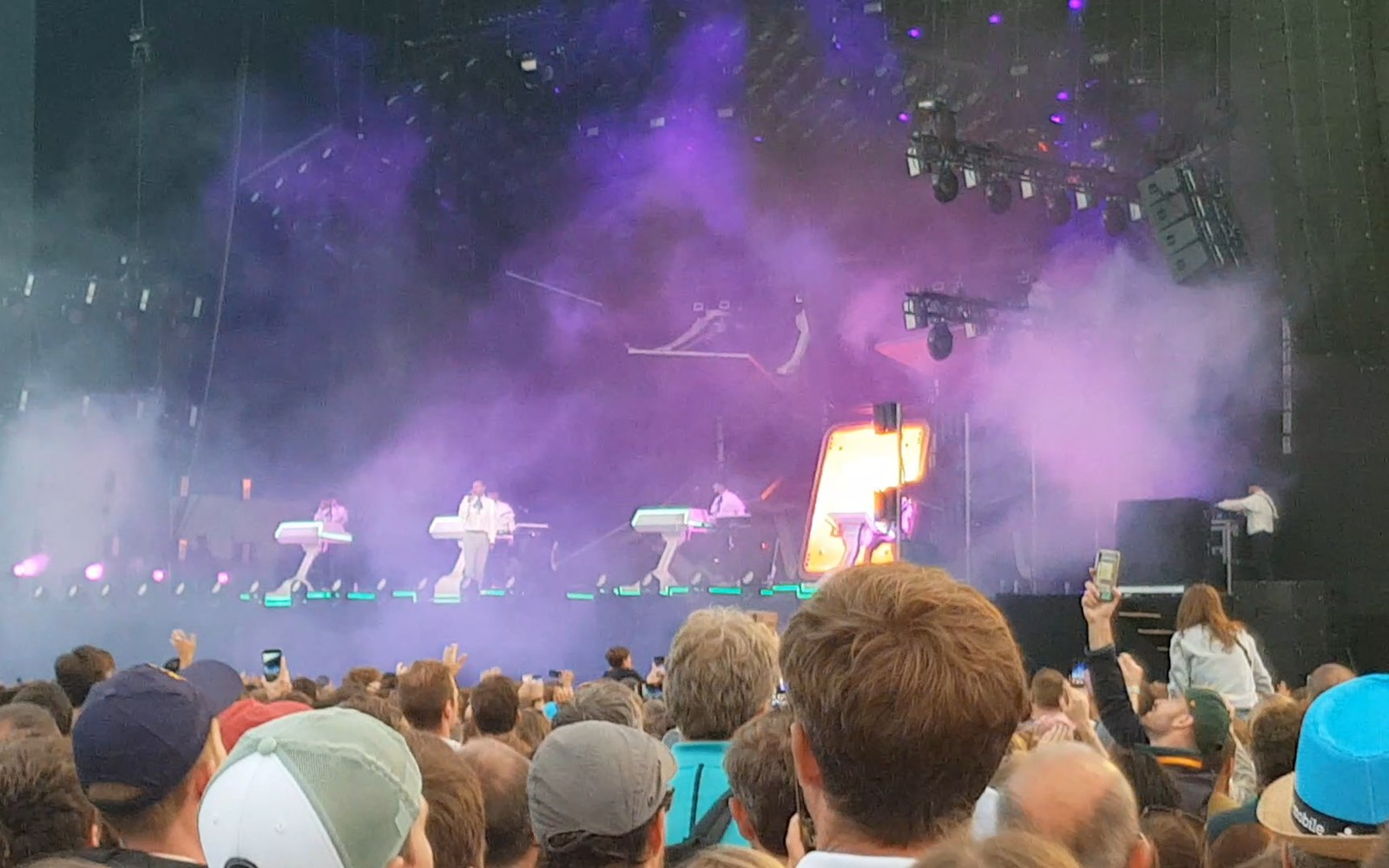
The architecture of a long silence
Orelsan released Civilisation in November 2021, six years after La Fête est finie and nearly a decade after the records that first made the Caen-raised rapper a genuinely divisive presence on the French chart. The gap was not unusual for him — his discography has always been punctuated by long pauses — but Multitude arrived in March 2022 with a different posture. Where a comeback record typically positions absence as an inconvenience to be explained away, this one folded the years between into its own logic. The silence became evidence.
The album's construction makes that argument formally. Orelsan worked again with his brother Clément Cotentin, who directed Montre jamais ça à personne — "Never Show Anyone This" — the documentary series released on Prime Video in 2021 and that functioned as a companion piece to the record: footage of the years in which nothing was released, shown as the record that preceded it. The documentary did not explain the gap; it presented it as a subject. By the time Multitude appeared, listeners had already been given a guided tour of the creative dormancy they might otherwise have experienced as neglect.
That structural move — documentary before album, absence before return — is not simply a marketing manoeuvre. It reflects something genuinely unusual in French rap: a willingness to put the machinery of making into the frame, to treat hesitation, revision and time as legitimate content rather than embarrassing backstage material. The result is a record whose emotional weight depends on what the audience already knows about the years it took to arrive.
What the numbers confirmed
Multitude debuted at number one on the SNEP albums chart in the week of its release and was certified Diamond — the highest certification tier in the French system, requiring 500,000 equivalent units — a threshold that, in the streaming era, combines sales with weighted stream counts and download equivalents. Diamond status places it among a small number of French-language albums to have reached that level in the post-streaming economy, where the arithmetic works differently from the unit-sale world in which earlier certifications were earned.
The Victoires de la Musique in 2023 gave Multitude the award for Album of the Year, closing a circuit the label and the industry had both been pointing toward since the record's release. The Victoires has a complicated relationship with rap — the genre has historically been under-represented relative to its commercial weight — which made the recognition feel significant beyond the routine validation of a prize. Orelsan had previously won at the ceremony for La Fête est finie in 2018; returning with a follow-up that won the same category five years later mapped his career as a set of long, deliberate arcs rather than a continuous chart presence.

The geography of a record made nowhere obvious
Orelsan has been consistently associated with Caen, in Normandy, rather than with the Parisian banlieue — the ring of suburbs — that produces the majority of French rap's commercial mainstream. That positioning is part of the record's identity. Bigflo & Oli made Toulouse a subject; Orelsan made Caen a negative space, a place defined partly by what it is not: not the 93, not Marseille, not the scene with the infrastructure. Multitude does not lean on that provincial outsider story as heavily as some earlier work, but the address is still legible in the record's texture — in its quieter passages, in its relationship to chanson phrasing, in the sense that it was made at a remove from the rooms where most of this music gets made.
What Multitude ultimately demonstrated is that, for a certain kind of artist, the interval between records can be load-bearing. The gap is not a void the audience has to forgive; it is the span across which the record makes its meaning. Six years is a long time in French music, where certification now measures streams accumulated in months. Making the absence part of the architecture was, in the end, the most precise decision on the album.